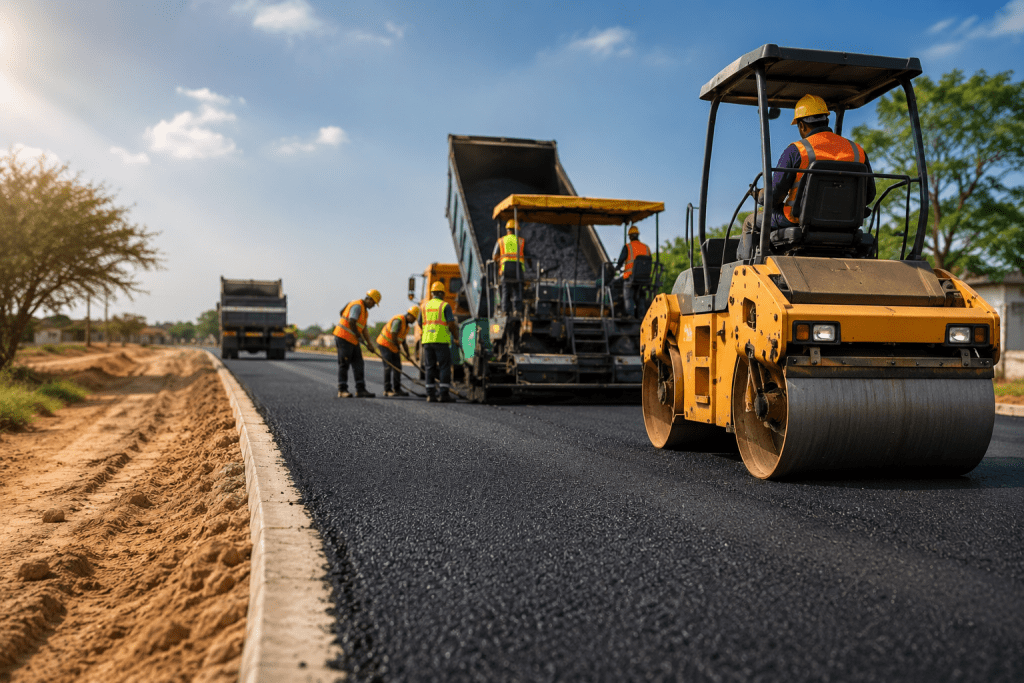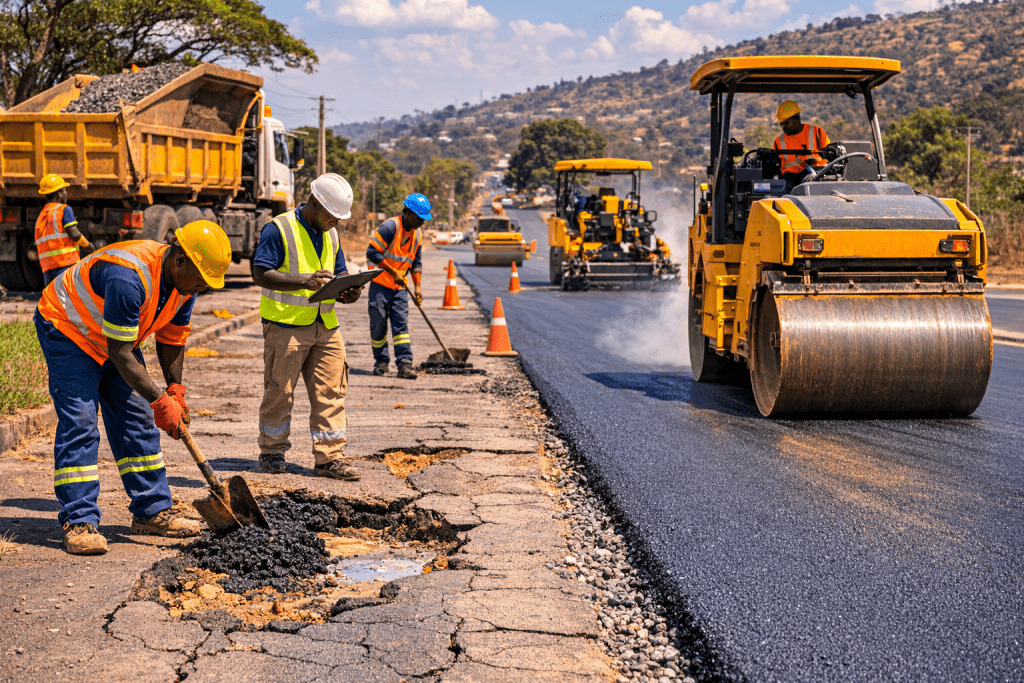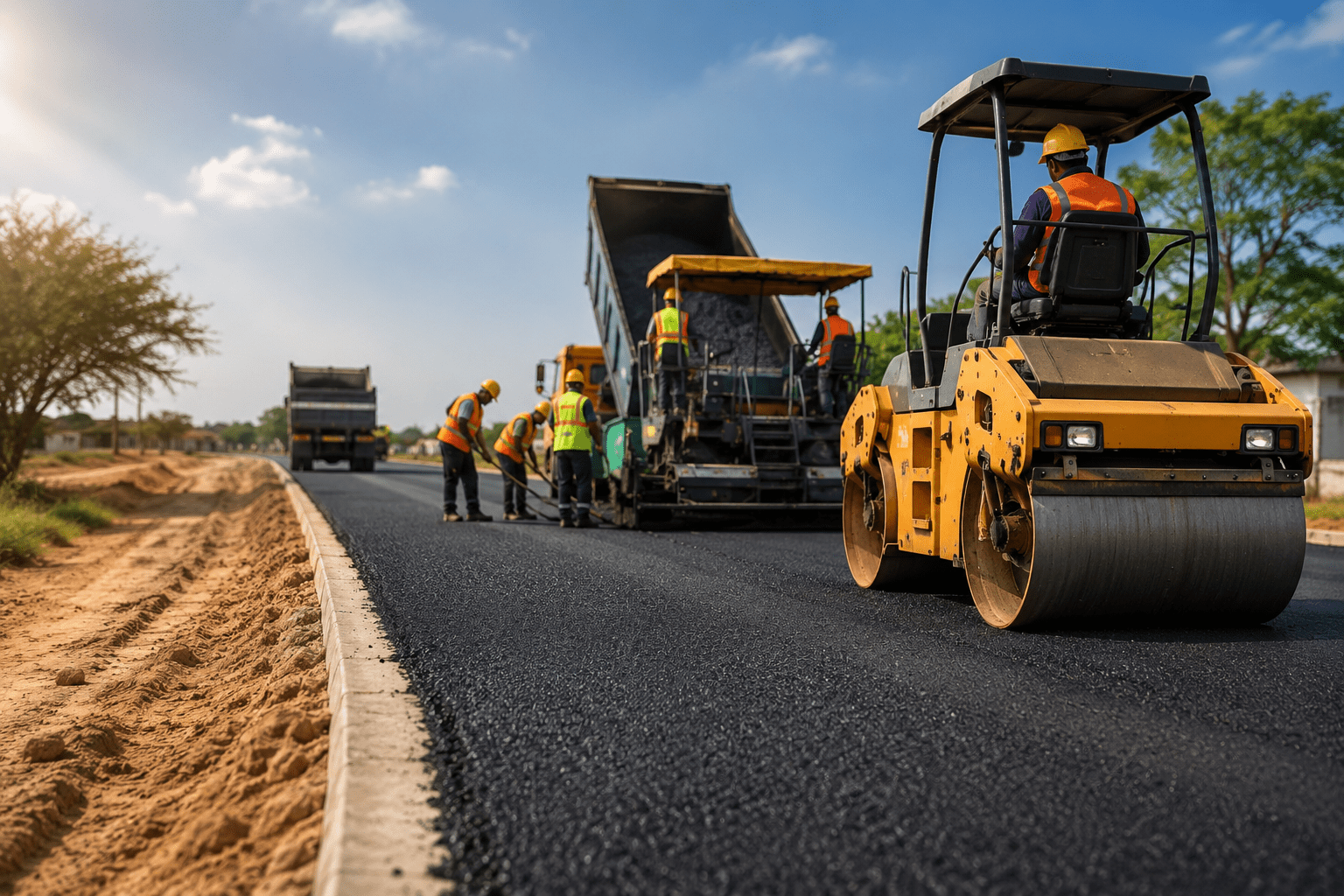
Road construction and tar surfacing costs in Zimbabwe vary depending on the size of the project, the condition of the ground, the type of vehicles expected to use the road, and the amount of preparation required before surfacing begins. Whether you are planning a residential driveway, a commercial parking area, a school access road, or a large industrial project, understanding what affects pricing can help you budget more accurately and avoid poor-quality workmanship.
Tarred roads remain one of the most durable and practical surfacing options for residential, commercial, and public infrastructure projects across Zimbabwe. Compared to gravel roads, asphalt surfacing reduces dust, improves accessibility, enhances safety during rainy seasons, and gives properties a cleaner and more professional appearance.
However, not all tar surfacing projects are priced the same. A small driveway in a residential area will cost significantly less than a heavy-duty industrial road designed for trucks and machinery. In many cases, the biggest cost difference comes from what lies beneath the asphalt surface. Poor soil conditions, drainage failures, and weak foundations can increase costs because the road requires additional preparation before surfacing can begin.
For property developers, businesses, schools, mines, farms, and municipalities, investing in proper road construction from the beginning usually reduces maintenance and repair costs in the long run.
Request a Tar Surfacing or Road Construction Quote
Planning a new road, asphalt surfacing project, or road rehabilitation work in Zimbabwe? Our team provides professional assessments and detailed quotations for residential, commercial, and industrial projects.
What Does Road Construction Cost in Zimbabwe?
Road construction costs in Zimbabwe are usually calculated based on square metre coverage, site conditions, material requirements, and the intended use of the road. Smaller projects are generally priced differently from large infrastructure developments because machinery, labour, transport, and preparation requirements vary from one project to another.
For smaller residential and light commercial projects, basic tar surfacing in Zimbabwe can start from approximately USD $18 to $35 per square metre. This usually applies to projects with relatively stable ground conditions and minimal preparation work.
Medium-duty asphalt surfacing for commercial properties, parking areas, schools, and business premises often ranges between USD $35 and $60 per square metre depending on traffic expectations and base thickness requirements.
Heavy-duty industrial roads and truck access routes can exceed USD $60 per square metre because they require stronger foundations, thicker asphalt layers, and additional compaction to withstand constant heavy traffic.
Road rehabilitation costs in Zimbabwe are often lower than complete reconstruction costs because the contractor works with portions of the existing structure rather than rebuilding the entire road from scratch. In many cases, rehabilitation projects may range from USD $10 to $30 per square metre depending on the severity of the damage and the type of repairs required.
The total project cost also depends on whether the contractor is handling:
- Ground clearing and excavation
- Base preparation
- Drainage installation
- Kerbing
- Asphalt surfacing
- Road markings
Projects requiring all these stages naturally cost more than simple resurfacing work on an already stable road.
Why Tar Surfacing Prices Vary So Much
One of the main reasons tar road costs in Zimbabwe vary significantly is because every site has different structural and environmental conditions. Two roads with the same surface area may require completely different levels of preparation before asphalt can be installed.
Ground preparation is often one of the biggest cost factors in road construction. If the soil is unstable or prone to movement, additional filling, stabilisation, and compaction may be necessary before the road can safely support traffic.
This is especially important in areas where roads are exposed to:
- Heavy rainfall
- Poor drainage
- Expansive clay soils
- Heavy vehicle movement
- Frequent water accumulation
Without proper preparation, even a newly tarred road can begin cracking or sinking within a short period of time.
Drainage also plays a major role in determining asphalt surfacing costs. Water is one of the leading causes of road failure. If rainwater is not directed away from the road surface properly, moisture can weaken the underlying base layers and cause potholes, cracks, and edge failures.
For this reason, many road construction projects in Zimbabwe include additional drainage infrastructure such as side drains, culverts, stormwater channels, and kerbing systems.
Another factor that affects tar surfacing pricing is the thickness of the asphalt layer itself. Roads designed for light passenger vehicles require different structural support compared to roads regularly used by trucks, buses, delivery vehicles, or industrial equipment.
A residential driveway may only require a lighter asphalt layer, while a warehouse access road may require deeper stone bases and thicker surfacing to handle heavier loads safely.
Material transportation can also increase project costs, especially for projects located outside major cities. Asphalt materials, aggregate stone, machinery, and fuel all contribute to the final quotation. Remote projects often require additional transport logistics, which increases the overall cost of construction.
Asphalt Surfacing vs Road Rehabilitation
Many property owners are unsure whether they need full road reconstruction or rehabilitation work. The right option depends on the condition of the existing road and the extent of the structural damage beneath the surface.
Road rehabilitation focuses on repairing and strengthening an existing road rather than rebuilding it completely. This option is often more affordable when the underlying structure of the road is still stable.
Common road rehabilitation work in Zimbabwe includes:
- Pothole repairs
- Crack sealing
- Surface overlays
- Base strengthening
- Edge repairs
- Drainage improvements
In many cases, rehabilitation can extend the lifespan of a road significantly without the cost of complete reconstruction.
However, there are situations where rehabilitation is no longer practical. Roads with widespread structural failure, severe drainage damage, or major foundation problems often require full reconstruction because repairs alone will not solve the underlying issues.
Repeated patchwork on severely damaged roads can eventually become more expensive than rebuilding the road properly from the beginning. This is why professional site assessments are important before any surfacing work begins.
Why Cheap Tar Surfacing Often Fails
One of the biggest mistakes property owners make is choosing contractors based purely on the lowest quotation. While cheaper pricing may appear attractive initially, poor workmanship usually becomes expensive later through constant repairs and maintenance.
Low-cost contractors often reduce pricing by cutting corners during the preparation phase. Unfortunately, most road failures begin beneath the surface where problems are not immediately visible after construction.
Some contractors reduce costs by using thinner asphalt layers, poor-quality aggregate materials, or inadequate compaction methods. Others skip important drainage work entirely to make quotations appear more competitive.
The road may initially look acceptable after completion, but problems often begin appearing within months. Cracks, potholes, rutting, sinking sections, and surface breakage usually indicate deeper structural weaknesses beneath the asphalt.
Proper road construction focuses heavily on what happens before the asphalt is installed. A strong foundation, correct drainage design, and quality compaction are what determine whether the road lasts for years or begins failing prematurely.
For commercial properties and industrial sites, poor road construction can also create operational problems. Damaged access roads affect vehicle movement, customer access, safety, and property appearance.
Residential and Commercial Tar Surfacing Projects
Tar surfacing is widely used across Zimbabwe for both residential and commercial applications because it offers a cleaner and more durable alternative to gravel surfaces.
Residential projects commonly include driveway surfacing, private roads, housing estate roads, and parking areas. Homeowners often choose asphalt surfacing because it improves accessibility during rainy seasons while also reducing dust and erosion around the property.
Commercial tar surfacing projects are generally larger and designed to handle heavier traffic volumes. Shopping centres, schools, warehouses, factories, and office parks usually require stronger road foundations due to the number of vehicles using the area daily.
Industrial projects often involve even heavier design requirements because roads may need to support trucks, loading vehicles, mining equipment, or construction machinery regularly.
In these environments, proper engineering and material selection become even more important because road failure can interrupt business operations and increase long-term maintenance costs significantly.
Final Thoughts
Road construction and tar surfacing costs in Zimbabwe depend on several factors including site conditions, drainage requirements, traffic load expectations, material thickness, and project size. While basic residential tar surfacing may start from around USD $18 per square metre, more complex commercial and industrial projects can cost significantly more due to additional structural requirements.
Understanding what affects pricing helps property owners make informed decisions and avoid shortcuts that may lead to premature road failure. In many cases, investing in proper preparation and quality workmanship from the beginning provides better long-term value than choosing the cheapest quotation available.
Whether the project involves new road construction, asphalt resurfacing, or road rehabilitation, working with experienced contractors helps ensure the finished surface remains durable, safe, and cost-effective for years to come.
Request a Tar Surfacing or Road Construction Quote
Planning a new road, asphalt surfacing project, or road rehabilitation work in Zimbabwe? Our team provides professional assessments and detailed quotations for residential, commercial, and industrial projects.