Choosing the right surface for a driveway, access road, parking area, or commercial property is an important decision because it affects durability, maintenance costs, appearance, and long-term value. In Zimbabwe, the most common surfacing options are tar surfacing, paving, and gravel. Each option has its own advantages, limitations, and ideal applications depending on the type of property and expected traffic.
Some property owners prioritise affordability, while others focus on durability, appearance, or low maintenance. A surface that works well for a residential driveway may not necessarily be suitable for a commercial yard, industrial site, or rural access road. Weather conditions, drainage, traffic volume, and budget all influence which option makes the most sense for a particular project.
Tar surfacing has become increasingly popular in Zimbabwe for both residential and commercial properties because it creates a cleaner and more durable finish compared to gravel roads. Paving remains a preferred option for decorative and high-end residential spaces, while gravel continues to be widely used in farms, rural properties, and temporary access roads due to its lower upfront cost.
Understanding the difference between these surfacing options helps property owners avoid costly mistakes and choose a solution that matches both their budget and long-term needs.
Request a Surfacing Quote for Your Property
Whether you are considering tar surfacing, paving, or gravel for your driveway, access road, parking area, or commercial property, our team can help you choose the right solution for your site and budget.
Understanding the Difference Between Tar, Paving and Gravel
Tar Surfacing
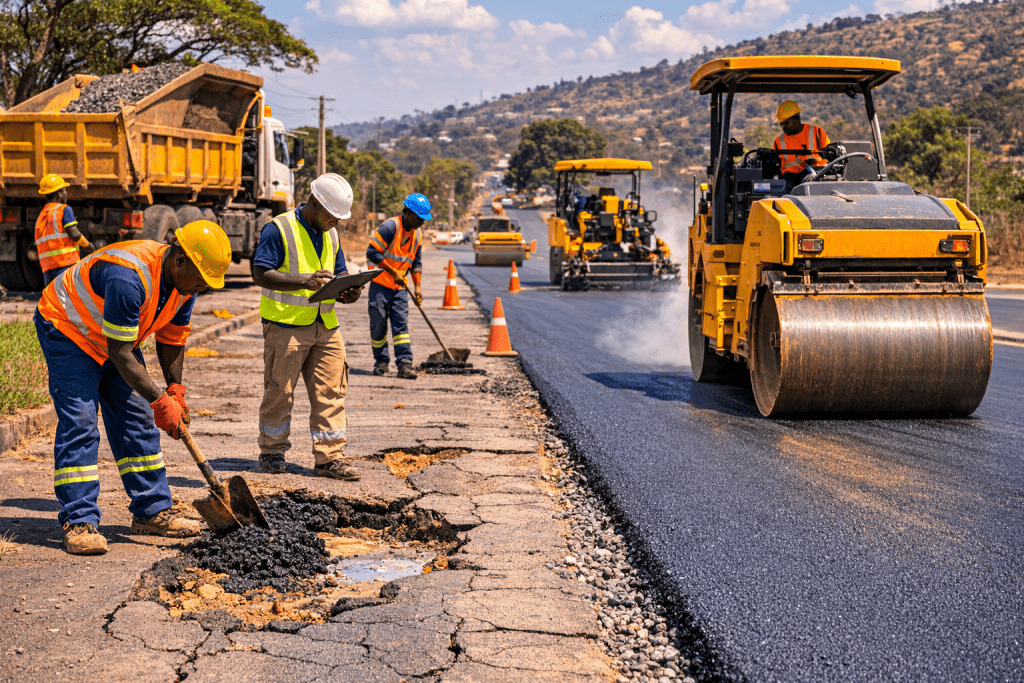
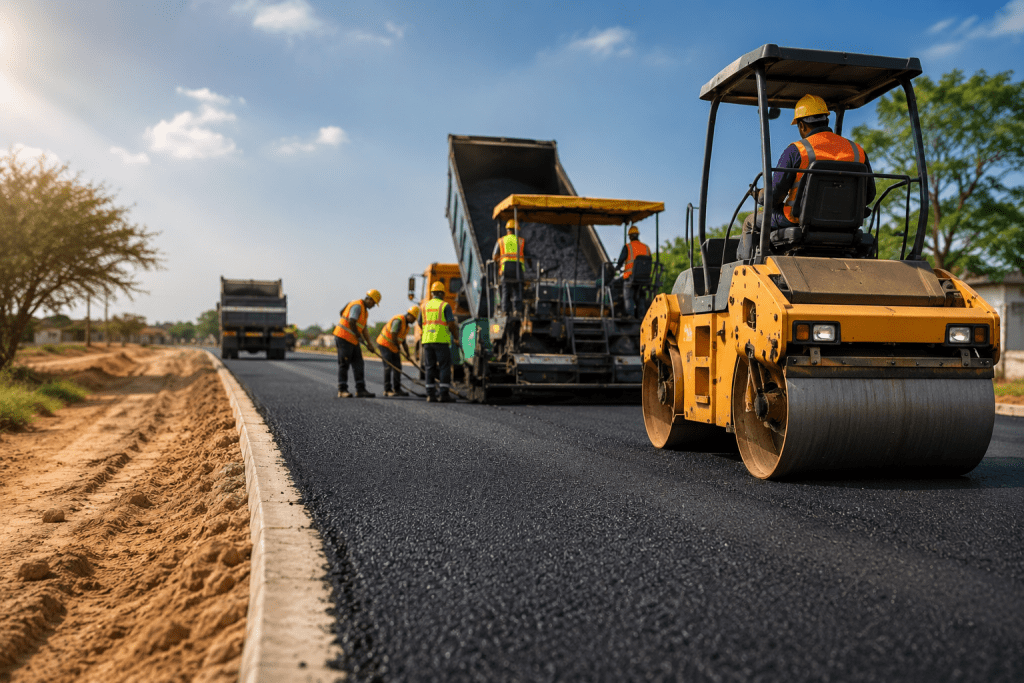
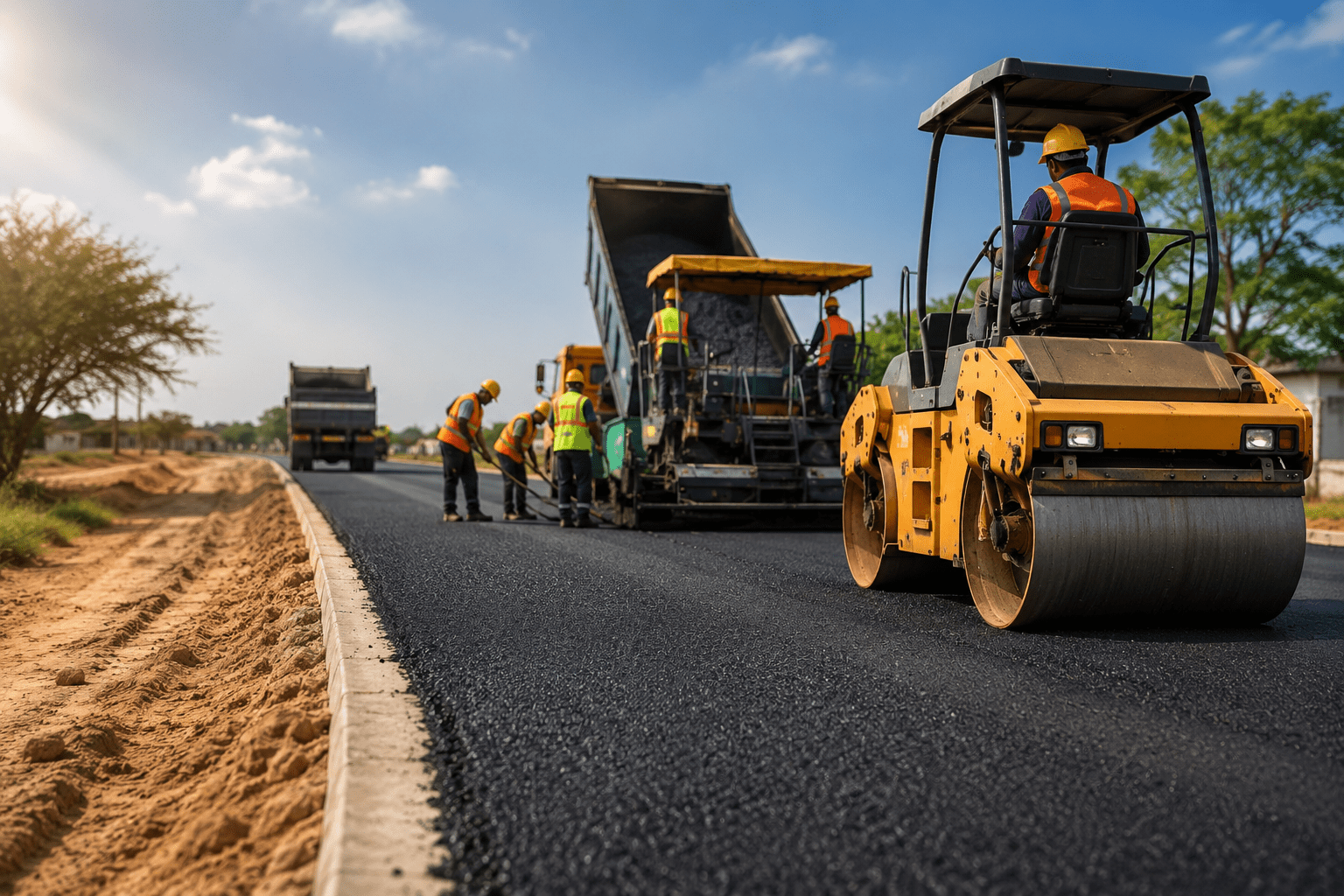
Tar surfacing, also commonly called asphalt surfacing or tarring, involves applying layers of crushed stone and asphalt to create a smooth, durable driving surface. This method is widely used for roads, driveways, parking areas, housing developments, schools, commercial properties, and industrial access roads throughout Zimbabwe.
A properly tarred surface provides a clean and professional appearance while also improving driving comfort and reducing dust. Unlike gravel roads, tarred roads perform much better during rainy weather because the surface remains stable and less prone to erosion or muddy conditions.
Tar surfacing is particularly popular for:
- Residential driveways
- Commercial parking areas
- Housing estate roads
- School roads
- Warehouse access roads
- Industrial yards
In Zimbabwe, tar driveway and asphalt surfacing costs generally start from around USD $18 to $35 per square metre for lighter residential applications. Heavy-duty commercial or industrial projects may cost significantly more depending on the thickness of the base and asphalt layers required.
One of the biggest advantages of tar surfacing is lower day-to-day maintenance compared to gravel roads. Once properly installed, asphalt surfaces can last for many years with periodic maintenance and repairs.
However, the quality of the final result depends heavily on proper ground preparation, drainage, and workmanship. Poorly installed tar surfaces can crack or develop potholes prematurely if the underlying base is unstable.
Paving
Paving involves installing concrete or brick pavers individually to create a patterned surface. This option is commonly used in residential properties, walkways, patios, pool areas, parking spaces, and certain commercial developments where appearance is an important consideration.
Many homeowners in Zimbabwe choose paving because it creates a more decorative and premium look compared to standard asphalt surfacing. Paving also offers flexibility in colour, pattern, and design, allowing property owners to customise the final appearance.
One advantage of paving is that damaged sections can often be repaired individually without replacing the entire surface. If a small section becomes damaged or stained, the affected pavers can usually be removed and replaced relatively easily.
Paving is commonly used for:
- Residential driveways
- Walkways
- Entertainment areas
- Shopping centre entrances
- Courtyards
- Pool surrounds
In Zimbabwe, paving costs typically range between USD $25 and $60 per square metre depending on the type of paver selected, the design complexity, and the amount of preparation required beneath the surface.
Although paving can look very attractive, it may not always be the best option for roads exposed to heavy truck traffic or large industrial machinery. Over time, individual pavers may shift or sink if the base beneath them is not properly compacted.
Weeds can also grow between paving joints if maintenance is neglected, especially during rainy seasons. For this reason, paving generally requires more ongoing maintenance than properly installed tar surfacing.
Gravel
Gravel remains one of the most affordable road surfacing options in Zimbabwe, especially for rural properties, farms, temporary access roads, and low-traffic areas. Gravel roads are created using compacted layers of crushed stone or gravel spread across the road surface.
Many property owners choose gravel initially because the installation cost is significantly lower than tar surfacing or paving. Gravel road construction in Zimbabwe may start from approximately USD $6 to $15 per square metre depending on material availability, transport distance, and ground conditions.
Gravel roads are commonly used for:
- Farm roads
- Rural access roads
- Construction site access
- Temporary roads
- Large undeveloped properties
While gravel is affordable upfront, maintenance can become a long-term challenge. Gravel surfaces often develop potholes, loose stones, erosion channels, and dust problems over time, especially in areas exposed to regular traffic or heavy rainfall.
During Zimbabwe’s rainy season, poorly maintained gravel roads can become muddy and difficult to use. Dust can also become a major problem during dry weather, particularly for residential properties or businesses located along busy gravel roads.
For low-traffic or budget-sensitive projects, gravel may still be a practical option. However, many property owners eventually upgrade from gravel to tar surfacing once maintenance costs and usability problems begin increasing.
Tar Surfacing vs Paving: Which Is More Affordable?
When comparing tarring vs paving in Zimbabwe, tar surfacing is often the more affordable option for larger areas such as roads, parking lots, and long driveways. Asphalt installation tends to become more cost-effective as project size increases because the surfacing process is faster and more suitable for covering large spaces efficiently.
Paving, on the other hand, is usually more labour-intensive because each paver is installed individually. Decorative paving patterns and premium paver styles can also increase overall project costs significantly.
For smaller residential areas where appearance is the main priority, paving may justify the higher cost. However, for larger commercial or industrial projects, tar surfacing is often preferred because it provides durability and affordability on a larger scale.
Maintenance costs also differ between the two. Tarred surfaces may occasionally require crack sealing or resurfacing after several years, while paving may require ongoing weed removal, joint sand replacement, and periodic levelling.
The right option ultimately depends on the intended use of the area, traffic volume, and the visual finish the property owner wants to achieve.
Gravel Road vs Tar Road: Which Performs Better?
When comparing gravel roads vs tar roads, tar surfacing generally offers better long-term performance, cleaner appearance, and improved driving conditions.
Tar roads are more resistant to erosion, dust, and weather damage when properly constructed. They also provide smoother driving surfaces and require less regular grading or reshaping compared to gravel roads.
Gravel roads may appear cheaper initially, but ongoing maintenance costs can add up over time. Frequent grading, filling potholes, replacing washed-away gravel, and managing dust can become expensive, particularly on busy roads.
Tar roads are usually the better choice for:
- Residential estates
- Schools
- Commercial properties
- Industrial facilities
- High-traffic access roads
Gravel may still be suitable for:
- Remote rural properties
- Farms
- Temporary roads
- Low-budget projects
- Low-traffic areas
In many cases, property owners start with gravel and later upgrade to tar surfacing once traffic increases or maintenance becomes difficult.
Choosing the Right Surface for Your Property
The best surfacing option depends on how the area will be used, the expected traffic load, and the level of maintenance you are prepared to handle over time.
Tar surfacing is often the best balance between affordability, durability, and low maintenance for larger driveways, access roads, and commercial properties. Paving works well for decorative residential applications where appearance is important, while gravel remains useful for rural and low-budget projects.
Rather than focusing only on upfront cost, it is important to consider long-term durability, maintenance requirements, drainage performance, and overall usability. In many cases, investing slightly more initially can reduce repair and maintenance costs significantly in the future.
Working with experienced surfacing contractors also helps ensure proper preparation, drainage, and installation quality, which are critical for long-term performance regardless of the surface type selected.
Final Thoughts
Tar surfacing, paving, and gravel each offer different advantages depending on the needs of the property owner and the intended use of the area. Tar surfacing remains one of the most practical and durable options for roads, commercial spaces, and large driveways in Zimbabwe, while paving offers decorative appeal for residential properties. Gravel continues to provide an affordable solution for farms, rural access roads, and temporary applications.
Understanding the differences between these options helps property owners make better decisions based on budget, maintenance expectations, appearance, and long-term performance. Whether you are planning a residential driveway, commercial parking area, or access road, choosing the right surface from the beginning can improve durability, functionality, and overall property value.
Get a Quote for Tar Surfacing or Paving
Need a durable surface for your driveway, access road, or commercial property? Contact our team for a professional quotation.