Water pipeline installation is one of the most important components of any water infrastructure project. Whether the objective is supplying water to a residential development, commercial property, industrial facility, agricultural project, mine, school, hospital, or municipal network, the success of the entire system depends on a properly designed and installed pipeline network.
One of the first questions clients ask is how much a water pipeline installation project will cost. The reality is that there is no single answer because every project has unique requirements. Pipeline installation costs can vary significantly depending on the size of the project, pipeline material, terrain conditions, excavation requirements, pipeline diameter, and the overall complexity of the network.
Across Zimbabwe, water reticulation and pipeline construction projects range from relatively small private installations to large-scale municipal and industrial infrastructure developments. Understanding the factors that influence project costs helps developers, property owners, project managers, and local authorities budget more accurately and make informed decisions during the planning stage.
Rather than focusing only on the price of the pipe itself, it is important to understand the broader construction requirements that contribute to the total project cost.
Request a Water Pipeline Installation Quote
Planning a water reticulation or pipeline project in Zimbabwe? Contact our team for professional advice and a detailed quotation tailored to your project.
Why Water Pipeline Costs Vary
No two pipeline projects are exactly the same. A short pipeline supplying a small commercial property will have very different requirements compared to a municipal reticulation network serving hundreds of households.
The overall project cost is influenced by a combination of material costs, labour, equipment requirements, engineering considerations, site conditions, and construction methodology. Some projects may require minimal excavation and straightforward installation, while others involve extensive trenching, difficult ground conditions, road crossings, or complex pressure management systems.
This is why experienced contractors typically evaluate a project in detail before providing an accurate quotation. Understanding site conditions and project requirements early helps prevent unexpected costs during construction.
Pipeline Diameter and Capacity Requirements
One of the biggest cost factors in any water pipeline project is the diameter of the pipe being installed.
Larger pipelines cost more because they require additional materials, larger fittings, more extensive excavation, and greater installation effort. The required pipe size depends on the amount of water that must be transported through the network.
For example, a pipeline supplying a single property will require significantly less capacity than a reticulation system serving an entire residential development or industrial facility.
Engineers determine the correct pipe diameter based on projected water demand, future expansion requirements, pressure considerations, and system performance objectives.
Although larger pipes increase installation costs, undersized pipelines can create pressure problems and capacity limitations that may require costly upgrades in the future.
Pipeline Material Selection
The type of pipe used in a project has a major influence on overall installation costs.
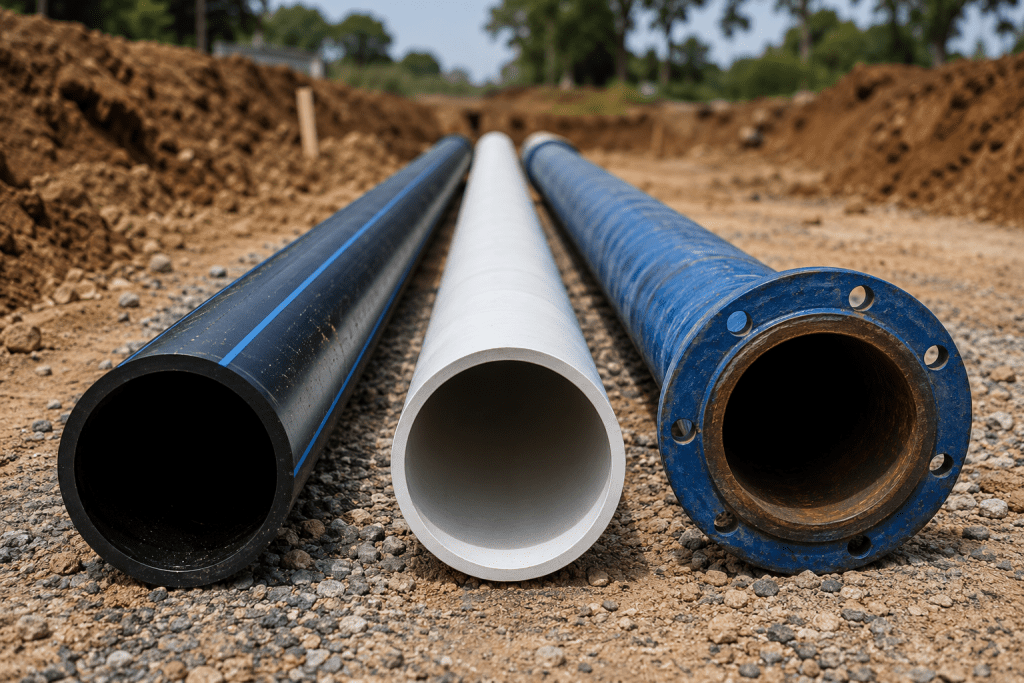
HDPE pipelines have become increasingly popular in Zimbabwe because of their durability, flexibility, corrosion resistance, and long service life. These characteristics make HDPE suitable for many municipal, industrial, mining, and residential water infrastructure projects.
Other materials may also be used depending on project requirements, including PVC, ductile iron, steel, and specialised pipeline systems designed for specific applications.
Material selection is rarely based on cost alone. Factors such as pressure requirements, environmental conditions, expected lifespan, maintenance considerations, and project specifications must also be evaluated.
While some materials may have a lower upfront cost, long-term performance and maintenance requirements can significantly influence the overall value of the investment.
Excavation and Trenching Costs
Excavation is often one of the largest cost components in pipeline construction projects.
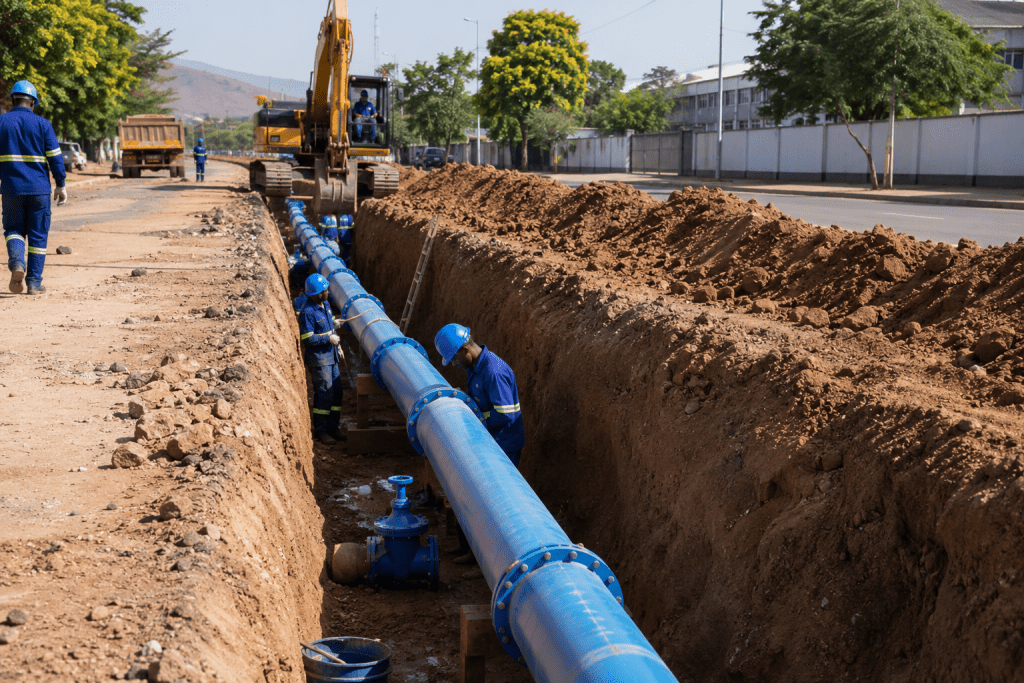
Before any pipe can be installed, trenches must be excavated to the required depth and width. The amount of excavation required depends on the pipeline diameter, project length, ground conditions, and applicable engineering standards.
In some locations, excavation can be relatively straightforward. In others, rocky ground, hard soil, underground obstructions, or existing infrastructure can increase construction complexity considerably.
Urban projects may also require additional precautions to protect nearby utilities, roads, buildings, and public infrastructure.
The depth of the pipeline also influences excavation costs. Deeper trenches require more labour, equipment, safety measures, and backfilling materials.
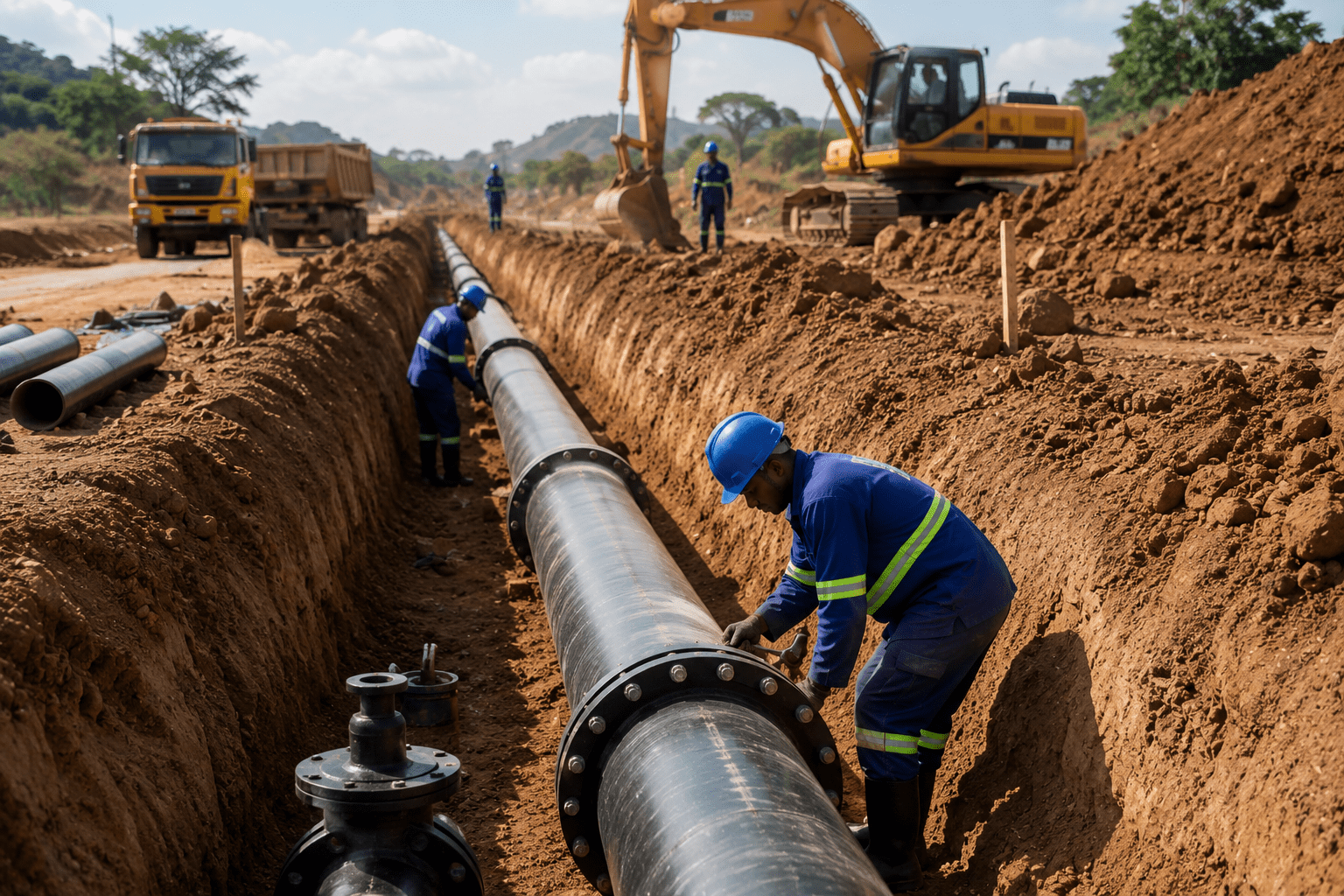
Projects involving significant trenching work often require excavators, tipper trucks, compaction equipment, and specialised earthmoving machinery, all of which contribute to the overall project budget.
Ground Conditions and Site Accessibility
Ground conditions play a major role in determining pipeline installation costs.
Soft soils, sandy conditions, and stable ground generally allow construction teams to work more efficiently. Rocky terrain, however, can significantly increase excavation costs due to the additional effort required to remove hard material.
Certain projects may also require rock breaking, drilling, or blasting before trench excavation can proceed. These additional activities can substantially increase both project duration and construction costs.
Site accessibility is another important factor. Projects located in remote areas may require longer equipment mobilisation distances, increased transport costs, and additional logistical planning.
Poor access roads, restricted working areas, and difficult terrain can all affect productivity and influence final pricing.
Project Length and Network Size
The total length of pipeline being installed naturally affects project costs.
Longer pipeline networks require additional materials, labour, equipment operation, fittings, valves, and testing procedures. However, larger projects can sometimes achieve economies of scale that reduce the average cost per metre compared to smaller installations.
Water reticulation projects often involve more than simply laying a single pipeline. Distribution networks may include multiple branches, service connections, valve chambers, control systems, and storage infrastructure.
As network complexity increases, construction costs generally increase as well.
The design stage plays an important role in identifying the most efficient layout while maintaining long-term system performance.
Water Reticulation Infrastructure Requirements
Many water pipeline projects form part of larger water reticulation systems.
In these situations, costs extend beyond pipeline installation alone. Additional infrastructure may include reservoirs, storage tanks, booster pump stations, pressure management systems, meters, hydrants, and control equipment.
These components are essential for maintaining reliable water supply throughout the network and ensuring the system operates efficiently under varying demand conditions.
A residential development, for example, may require storage facilities and pressure management infrastructure to ensure consistent water supply across all properties.
Industrial and municipal projects often require even more sophisticated reticulation systems to support larger demand volumes and operational requirements.
Understanding these additional infrastructure requirements helps provide a more realistic view of overall project costs.
Speak to a Water Infrastructure Specialist
Need assistance with pipeline construction, water reticulation, or infrastructure planning? Our team is ready to help with projects of all sizes.
Labour and Equipment Requirements
Labour and equipment costs represent another significant portion of pipeline installation budgets.
Construction crews are responsible for excavation, pipe installation, jointing, testing, backfilling, and site restoration. The size of the workforce required depends on the project scope and complexity.
Heavy equipment is often necessary throughout the construction process. Excavators, compactors, loaders, tipper trucks, water bowsers, and other machinery may be required depending on site conditions and project specifications.
The duration of equipment usage directly affects project costs. Complex installations requiring extended construction periods generally involve higher equipment and labour expenses.
Working with experienced contractors helps improve productivity and minimise costly delays during construction.
Testing, Commissioning, and Quality Control
Pipeline installation does not end once the pipes are placed in the ground.
Before the system becomes operational, contractors must conduct pressure testing, leak detection procedures, inspections, and commissioning activities to verify performance.
Testing is an important part of quality assurance because it helps identify potential issues before the system is placed into service.
Any defects discovered during testing must be corrected before project completion. Proper commissioning ensures that the pipeline operates safely, efficiently, and according to design specifications.
Although testing and quality control activities add to project costs, they help prevent significantly more expensive problems later.
Water Pipeline Projects Across Zimbabwe
Demand for water infrastructure continues to grow across Zimbabwe as residential developments, commercial projects, industrial facilities, agricultural investments, and municipal infrastructure programmes expand.
Water pipeline construction plays a critical role in supporting these developments by providing reliable distribution networks capable of meeting current and future demand.
Projects are undertaken throughout major urban centres and surrounding regions including Harare, Bulawayo, Mutare, Gweru, Masvingo, Kwekwe, Chinhoyi, Marondera, and other growing areas where water infrastructure remains a priority.
Proper planning, professional design, and quality construction help ensure that these investments deliver reliable long-term performance.
How to Reduce Water Pipeline Installation Costs
Reducing costs does not necessarily mean choosing the cheapest materials or cutting corners during construction.
Successful projects often achieve better value through proper planning, accurate design, efficient construction methods, and the selection of suitable materials for the intended application.
Some practical ways to improve cost efficiency include:
- Conducting proper site investigations before construction begins.
- Selecting pipeline materials appropriate for the project requirements.
- Planning for future expansion during the design stage.
- Working with experienced contractors and engineers.
- Identifying potential site challenges early in the project.
Investing in quality design and construction often reduces maintenance costs, repairs, and future upgrades, resulting in better long-term value.
Final Thoughts
Water pipeline installation costs in Zimbabwe depend on numerous factors, including pipeline diameter, material selection, excavation requirements, ground conditions, project length, labour, equipment usage, and the overall complexity of the reticulation network.
Because every project is different, accurate pricing requires a detailed assessment of the site and project requirements. While material costs are important, they represent only one part of the overall construction budget.
Successful water infrastructure projects rely on careful planning, professional engineering, quality materials, and experienced construction teams. By understanding the factors that influence pipeline installation costs, developers, municipalities, businesses, and property owners can budget more effectively and make informed decisions that support reliable long-term water supply infrastructure.
Request a Water Pipeline Installation Quote
Whether you are planning a residential development, commercial project, industrial facility, or municipal reticulation network, contact our team for professional water pipeline installation services across Zimbabwe.