Reliable access to water is essential for homes, businesses, schools, hospitals, industrial facilities, housing developments, and agricultural projects. While most people think about reservoirs, boreholes, dams, and water treatment plants when discussing water infrastructure, the system that actually delivers water to end users is known as water reticulation.
A water reticulation system is responsible for transporting water from its source to consumers through a network of pipes, valves, pumps, storage facilities, and related infrastructure. Without an effective reticulation system, even a reliable water source cannot provide consistent supply to the people and facilities that depend on it.
Across Zimbabwe, water reticulation plays a critical role in residential developments, commercial properties, industrial parks, schools, hospitals, municipalities, and infrastructure projects. As towns expand and new developments emerge, properly designed water reticulation systems become increasingly important for ensuring reliable access to clean water.
Understanding how water reticulation works helps property developers, project managers, local authorities, and business owners make informed decisions when planning infrastructure projects.
Request Water Reticulation Services
Need professional water reticulation or pipeline construction services for your project? Contact our team to discuss your requirements.
Understanding Water Reticulation
Water reticulation refers to the distribution network that delivers water from a source or storage facility to the final user. The system is designed to transport water efficiently while maintaining adequate pressure and flow throughout the network.
The water source may be a municipal supply, treatment plant, reservoir, dam, borehole system, or other approved source. Once water enters the reticulation network, it travels through a series of pipelines and distribution infrastructure before reaching homes, businesses, or facilities connected to the system.
A properly designed reticulation network ensures that water can be distributed reliably across the entire service area. This becomes particularly important in large residential developments, commercial estates, industrial facilities, and municipal infrastructure projects where multiple users depend on the same distribution network.
Water reticulation is therefore not simply about laying pipes underground. It involves engineering, hydraulic design, pressure management, network planning, and long-term infrastructure reliability.
How Does a Water Reticulation System Work?
A water reticulation system functions by moving water through a carefully planned distribution network. Water is transported from its source to storage facilities or directly into the pipeline system depending on the project design.
Engineers must consider several factors when designing a reticulation network, including water demand, pressure requirements, elevation changes, future expansion needs, and pipeline capacity.
If pressure within the system is too low, users may experience poor water supply. If pressure becomes too high, pipes and fittings can suffer damage over time. Proper design helps maintain the balance needed for reliable operation.
In many Zimbabwean developments, water reticulation systems include storage tanks and booster pumps that help maintain consistent pressure throughout the network. This is especially important in areas with varying terrain or significant distances between the water source and consumers.
The ultimate goal is to ensure that water reaches every connection point efficiently, safely, and consistently.
Components of a Water Reticulation System
A water reticulation network consists of several interconnected components working together to distribute water effectively.
Pipelines form the backbone of the system and transport water throughout the network. These pipes vary in size depending on demand requirements and the area being served.
Valves are installed at strategic points throughout the network to control flow, isolate sections for maintenance, and improve operational flexibility. Storage reservoirs and tanks help regulate supply and provide reserve capacity during periods of high demand.
Pumps are often required where elevation differences or long distances affect water pressure. Additional infrastructure such as meters, hydrants, pressure-reducing devices, and control systems may also be incorporated depending on the complexity of the project.
Each component plays an important role in ensuring the network operates efficiently and remains reliable over the long term.
Why Water Reticulation Is Important
Water reticulation is one of the most important elements of modern infrastructure because it enables communities and businesses to access water where it is needed most.
Without a functional distribution network, water cannot be delivered effectively regardless of how much water is available at the source. A well-designed reticulation system improves reliability, reduces water losses, supports future growth, and helps maintain consistent service levels.
For residential developments, water reticulation ensures that households receive dependable water supply for daily use. Commercial and industrial facilities rely on reticulation systems to support operations, manufacturing processes, sanitation requirements, and fire protection systems.
Municipalities depend on water reticulation infrastructure to serve growing populations while maintaining acceptable service standards. As urban development continues across Zimbabwe, investment in water reticulation infrastructure remains essential for sustainable growth.
Water Reticulation for Residential Developments
Residential developments require carefully planned water reticulation systems to support current and future demand.
During the planning stage, engineers calculate expected water consumption based on the number of households, occupancy rates, and anticipated growth within the development. These calculations help determine pipe sizes, storage requirements, and network capacity.
Modern housing developments often require extensive reticulation infrastructure that connects multiple roads, residential stands, community facilities, and public amenities. Proper design helps ensure that every property receives sufficient water pressure and flow.
Poorly planned systems can result in pressure problems, supply interruptions, and costly upgrades in the future. Investing in quality design and construction from the beginning helps avoid these challenges and supports long-term development success.
Water Reticulation for Commercial and Industrial Projects
Commercial and industrial facilities often have significantly different water requirements compared to residential developments.
Factories, warehouses, processing plants, shopping centres, hospitals, schools, and business parks may require larger distribution networks capable of supporting higher demand levels. Some facilities also require specialised water infrastructure to support operational processes or fire protection systems.
For these projects, reliability becomes particularly important because interruptions can affect productivity, safety, and operational performance.
Water reticulation systems for industrial applications must therefore be designed to accommodate peak demand while maintaining adequate pressure and flow throughout the network.
Proper planning also allows future expansion without requiring major modifications to the existing infrastructure.
Discuss Your Water Infrastructure Project
Our team provides professional water reticulation and pipeline construction services for residential, commercial, industrial, and municipal developments.
Water Pipeline Construction in Zimbabwe
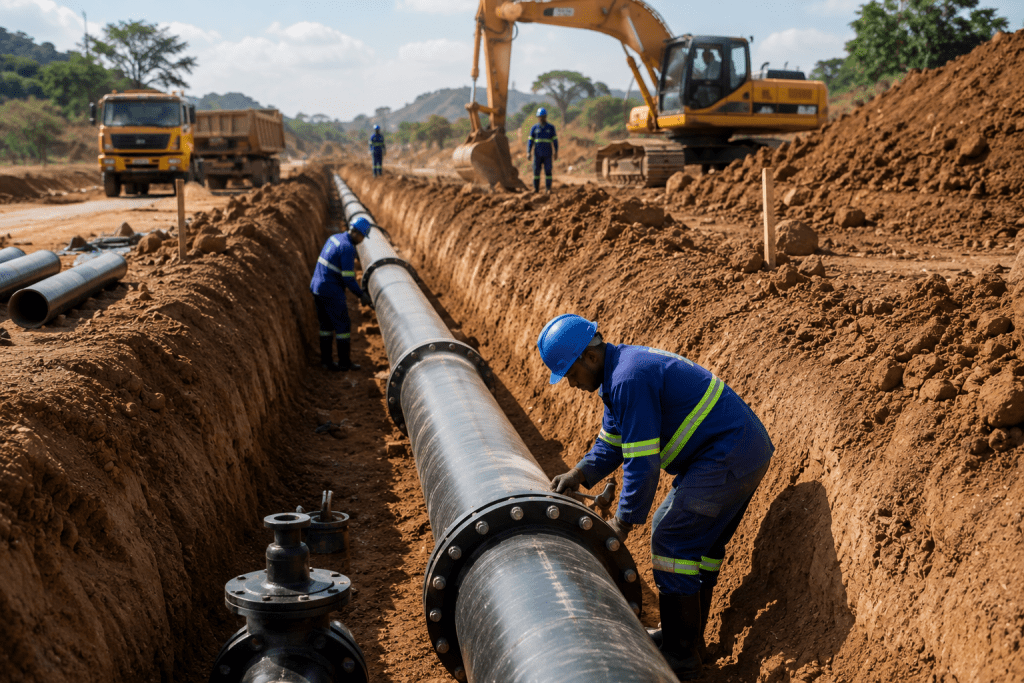
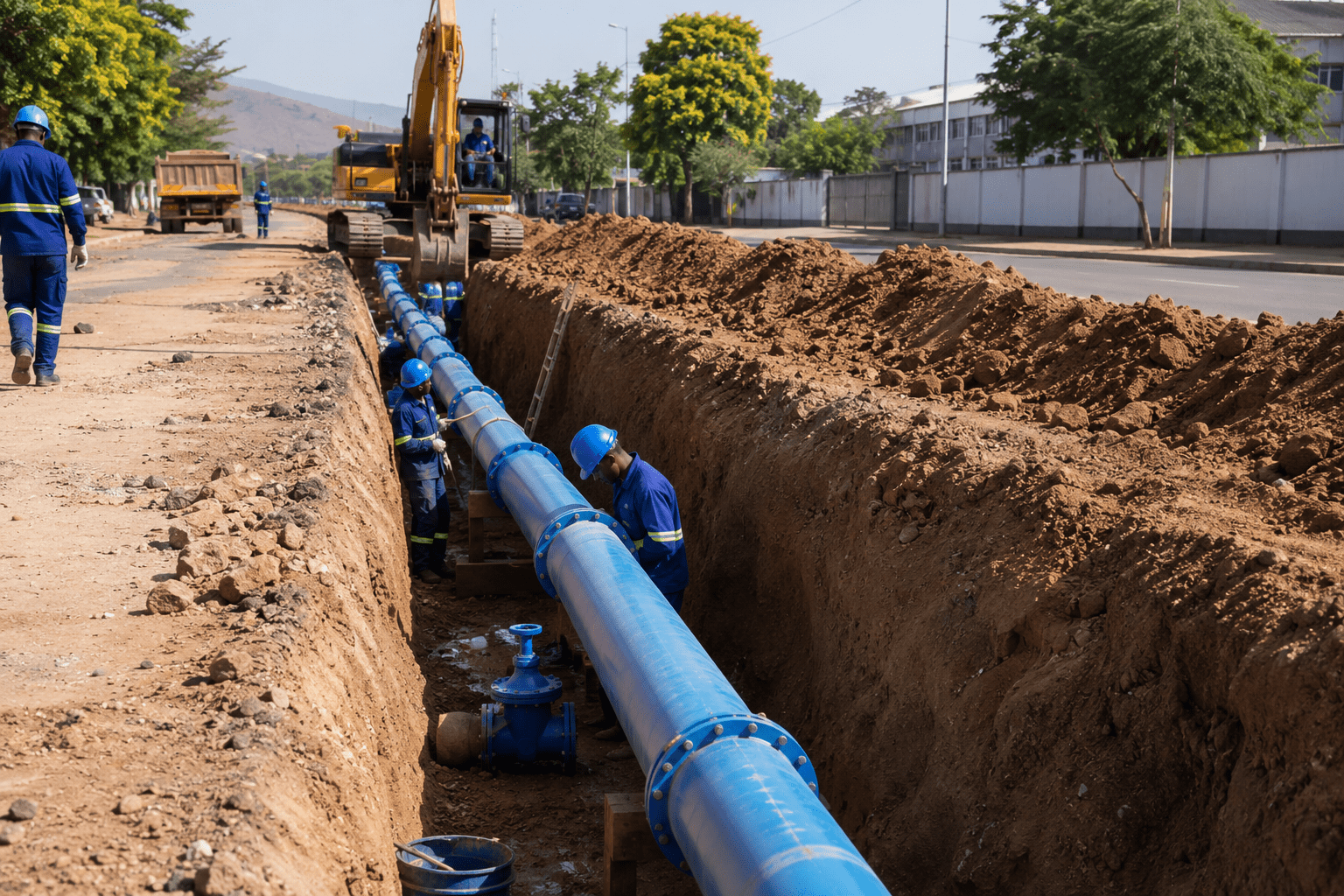
Pipeline construction forms a major part of water reticulation projects throughout Zimbabwe. Once the network design has been finalised, construction teams begin installing the infrastructure required to distribute water efficiently.
The process typically involves excavation, trench preparation, pipe installation, jointing, pressure testing, backfilling, and commissioning. Construction quality is critical because underground infrastructure is expected to operate reliably for many years.
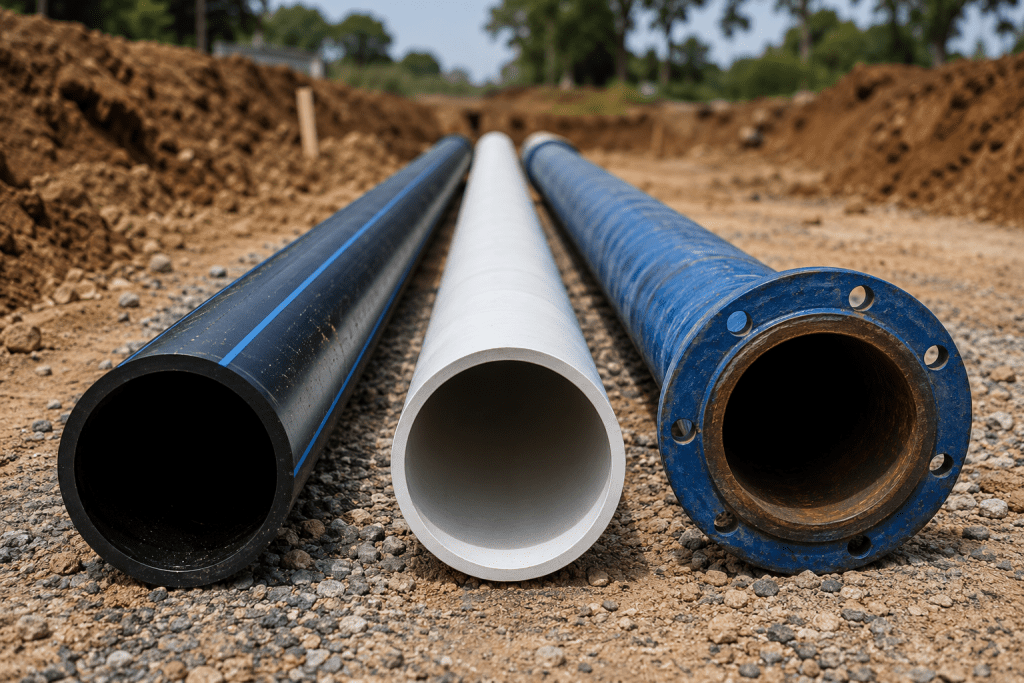
Material selection also plays an important role. Different pipe materials may be used depending on pressure requirements, ground conditions, environmental factors, and project specifications.
Proper installation techniques help minimise future maintenance issues and reduce the risk of leaks, failures, and service interruptions.
For municipalities, developers, and commercial clients, working with experienced contractors helps ensure that projects meet engineering standards and deliver long-term performance.
Common Challenges in Water Reticulation Projects
Water reticulation projects can face a variety of technical and operational challenges if not properly planned.
Population growth often increases demand beyond the original design capacity of older systems. Inadequate pressure management can result in service disruptions or infrastructure damage. Leaks and water losses may also affect system performance if maintenance is neglected.
Topography presents another challenge in many parts of Zimbabwe. Significant elevation changes can complicate pressure management and require additional infrastructure such as booster stations or storage reservoirs.
Funding constraints, ageing infrastructure, and expanding service areas can further increase the complexity of water reticulation projects.
Addressing these challenges requires proper planning, engineering expertise, and ongoing maintenance to ensure reliable long-term operation.
Water Infrastructure Services Across Zimbabwe
Water reticulation systems play a vital role in supporting residential developments, commercial projects, industrial facilities, municipalities, schools, hospitals, and public infrastructure throughout Zimbabwe.
As development continues across the country, demand for reliable water distribution infrastructure continues to grow. Properly designed and constructed reticulation networks help support economic growth, improve service delivery, and provide communities with dependable access to water.
Projects are undertaken across major cities and surrounding regions including Harare, Bulawayo, Mutare, Gweru, Masvingo, Kwekwe, Chinhoyi, Marondera, and other developing areas where water infrastructure remains a critical requirement.
Final Thoughts
Water reticulation is the infrastructure system responsible for distributing water from a source to homes, businesses, industries, and communities. Although often overlooked, it is one of the most important components of modern infrastructure because it ensures that water reaches the people and facilities that depend on it.
A successful water reticulation system requires careful planning, professional engineering, quality construction, and ongoing maintenance. Whether serving a residential development, commercial facility, industrial project, or municipal network, the objective remains the same: delivering reliable water supply safely and efficiently.
As Zimbabwe continues to expand and develop, investment in water reticulation and pipeline infrastructure will remain essential for supporting sustainable growth and improving access to water across the country.
Discuss Your Water Infrastructure Project
Our team provides professional water reticulation and pipeline construction services for residential, commercial, industrial, and municipal developments.